




According to a Chinese tipster on Weibo, OpenAI is preparing to launch its first-ever hardware product. Instead of a radical new device, the company is reportedly starting with something more familiar: OpenAI AI earbuds powered by its own artificial intelligence model.
The report suggests that OpenAI has scaled back its broader hardware ambitions for now. Rising production costs and ongoing component constraints are believed to be key factors behind the shift.
From AI Pendant to AI Earbuds
Earlier rumors pointed to OpenAI working on a small AI pendant or pen-like device. These ideas aligned with comments from CEO Sam Altman, who previously described a future AI device as more “peaceful” and “calm” than a smartphone.
Speculation intensified after OpenAI brought on former Apple chief designer Jony Ive, fueling expectations of a completely new hardware category. However, plans appear to have changed.
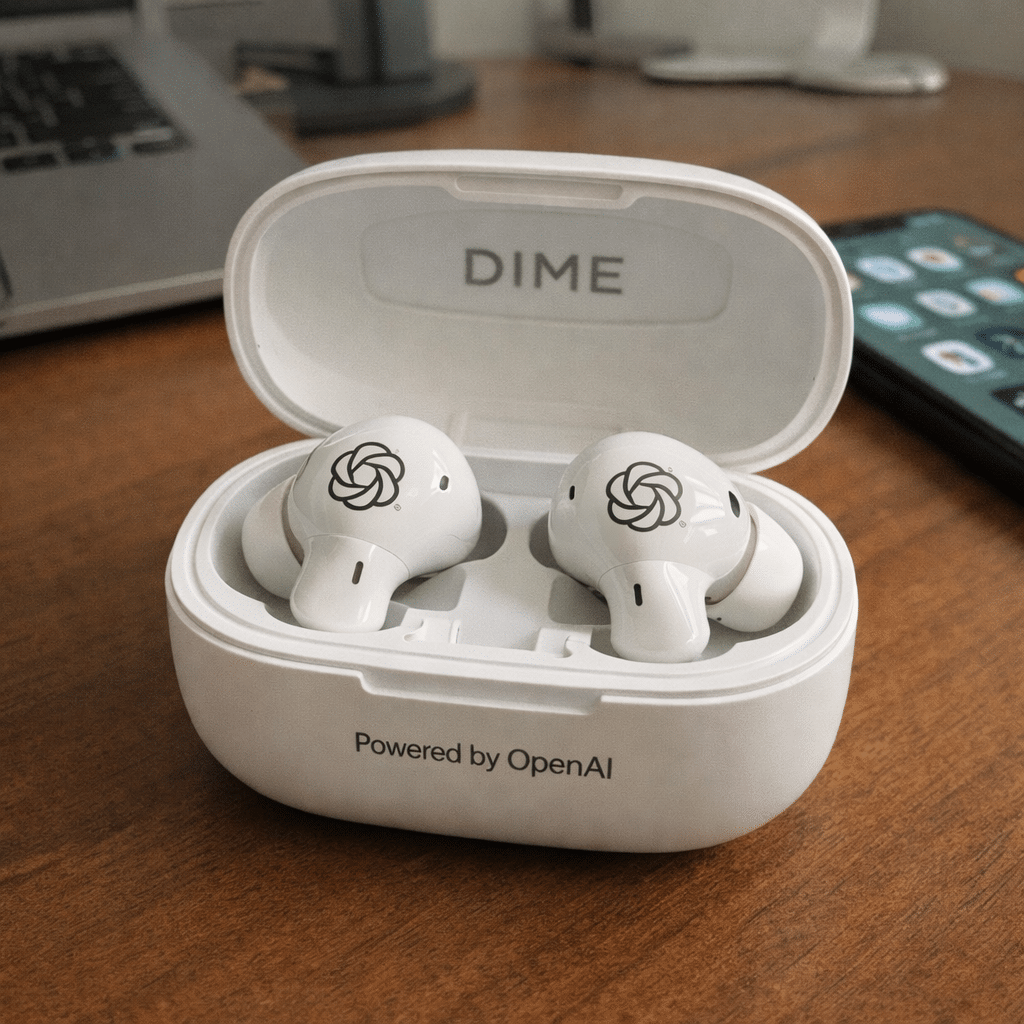
According to the same source, OpenAI is now opting for a simpler and more immediately practical product. AI-powered earbuds allow the company to introduce hardware without the high risks associated with launching an entirely new form factor.
What We Know So Far About OpenAI AI Earbuds
Details remain limited, but the earbuds are reportedly codenamed “Dime.” The product is expected to launch before the end of the year. It will rely on OpenAI’s in-house AI model, though no technical specifications or features have been disclosed yet.
The report also claims that OpenAI plans to release a more advanced version later on. This upgrade would arrive once global high-bandwidth memory (HBM) supply issues ease, allowing for more powerful on-device AI processing.
A Cautious First Step Into Hardware
If accurate, the move positions OpenAI’s AI earbuds as an entry point rather than a final destination. Starting with audio hardware lets the company test real-world consumer adoption while keeping costs and complexity manageable.
As OpenAI continues to expand beyond software, its first hardware product may focus less on disruption and more on quiet, everyday utility—an approach that mirrors the company’s recent emphasis on calm, ambient AI experiences.
The information was first reported by a Chinese technology outlet citing Weibo sources.