




Early recognition is emerging as the front line in the fight against encephalitis, as global health experts emphasize the importance of identifying symptoms sooner to prevent death and lifelong neurological disability ahead of World Encephalitis Day on February 22.
In neurological emergencies, minutes shape survival, recovery, and long-term quality of life. Encephalitis, an inflammation of the brain, often begins with symptoms that resemble common illnesses. However, delayed recognition can result in severe acquired brain injury or death.
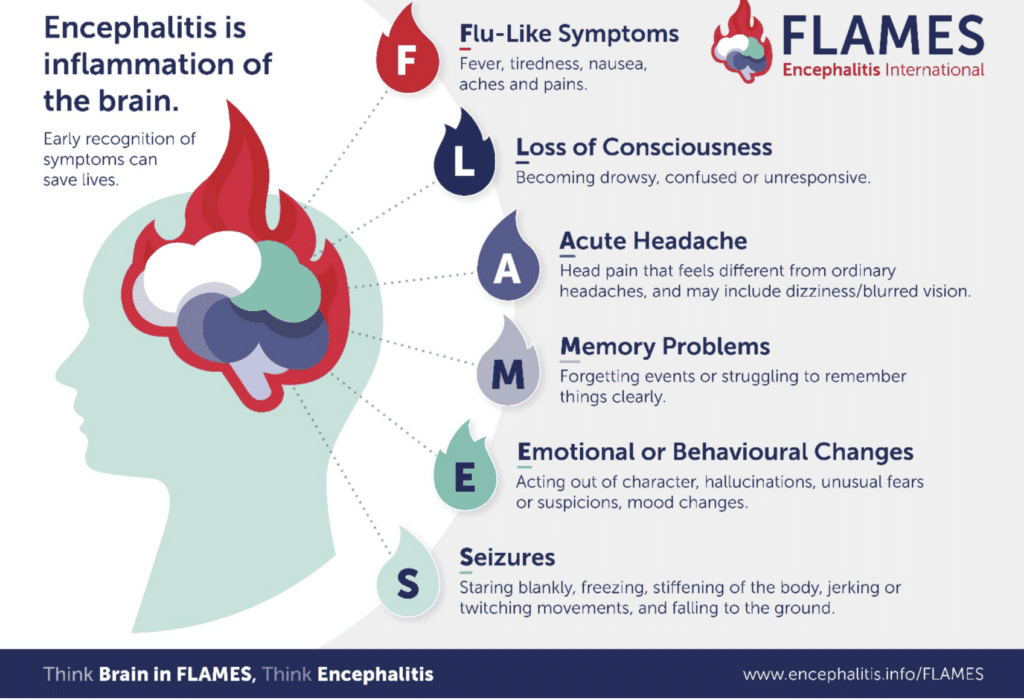
To bridge the gap between early symptoms and accurate diagnosis, Encephalitis International has introduced a structured recall tool called FLAMES, designed to support earlier recognition in both healthcare settings and the community.
What Are the FLAMES Warning Signs for Encephalitis?
The FLAMES warning signs for encephalitis highlight six urgent symptoms that require immediate medical attention:
F – Flu-like symptoms
L – Loss of consciousness
A – Acute headache
M – Memory problems
E – Emotional or behavioral changes
S – Seizures
These symptoms appear in both infectious and autoimmune encephalitis and signal the need for urgent medical evaluation.
“Encephalitis progresses quickly, yet awareness remains dangerously low,” said Dr. Ava Easton, Chief Executive of Encephalitis International. “When warning signs are missed, diagnosis is delayed, and the risk of death or lifelong disability rises.”
A Growing but Under-Recognized Global Threat
Encephalitis affects three people every minute globally. Yet nearly eight in ten adults remain unaware of the condition, contributing to delays in diagnosis and poorer outcomes.
According to the World Health Organization, encephalitis is a leading cause of neurological health loss in children under five and a growing public health concern across all age groups.

Although relatively rare compared to other neurological conditions, encephalitis carries a high disease burden due to long-term disability when treatment is delayed. In several countries, its incidence exceeds that of motor neurone disease, bacterial meningitis, and multiple sclerosis.
For a more global health context, refer to the World Health Organization at https://www.who.int
Why Early Recognition Matters in the Philippines
In low-to middle-income settings such as the Philippines, the encephalitis burden is intensified by limited neurological services and access to specialized care.
Before routine immunization, Japanese encephalitis exposure increased with age, reaching 65.7 percent among adolescents. Case fatality rates reached up to 21.1 percent, while neurological complications affected as many as 81.8 percent of survivors.
National surveillance recorded at least 0.7 Japanese encephalitis cases per 100,000 children, with seasonal peaks during the rainy months and a higher burden in northern regions.
Emerging evidence also indicates increasing cases of autoimmune encephalitis among children in Philippine hospital settings. Regional monitoring linked to Nipah virus, a zoonotic infection known to cause severe encephalitis, further underscores the need for vigilance, even without confirmed local outbreaks.
Dr. Ferron F. Ocampo, Adult Neurology and Neuroinfectious Diseases specialist, emphasized that timing changes outcomes. Early recognition leads to faster treatment and improved survival rates.
From Awareness to Action: World Encephalitis Day 2026
Health experts are urging communities and frontline providers to familiarize themselves with the FLAMES warning signs for encephalitis.
World Encephalitis Day, led by Encephalitis International, takes place every February 22. The campaign encourages people to wear red and share awareness messages using #Red4WED and #WorldEncephalitisDay.
A World Encephalitis Day Appeal has also been launched to raise funds supporting global prevention and awareness efforts. More information is available at https://www.encephalitis.info/wed-appeal.
World Encephalitis Day 2026 reinforces one clear message: encephalitis is time-critical. Earlier recognition enables faster diagnosis, earlier treatment, and better survival outcomes.
Because when the brain is in FLAMES, every minute counts. Learn the FLAMES warning signs for encephalitis today and share them with your family and community.